
Why a QR Code Digital Business Card is Better than Paper Cards
Professional connections have changed over the years, and now QR code digital business cards have become an esteemed choice for them. However, there are still some organizations and companies that depend on old paper business cards for networking.
This creates a huge problem for teams that want to share contact details quickly and make an impact at meetings. Many professionals are asking questions. Are paper cards still practical? Do they support modern business growth? Can they match the convenience of a mobile-based business identity?
This blog covers every important point. You will learn what a QR code digital business card is, how it compares to a paper business card, its major advantages, key differences, use cases for different business segments, and why companies are switching to digital contact sharing.
Understand why professional networking matters in the corporate world.
What is a QR Code Digital Business Card?
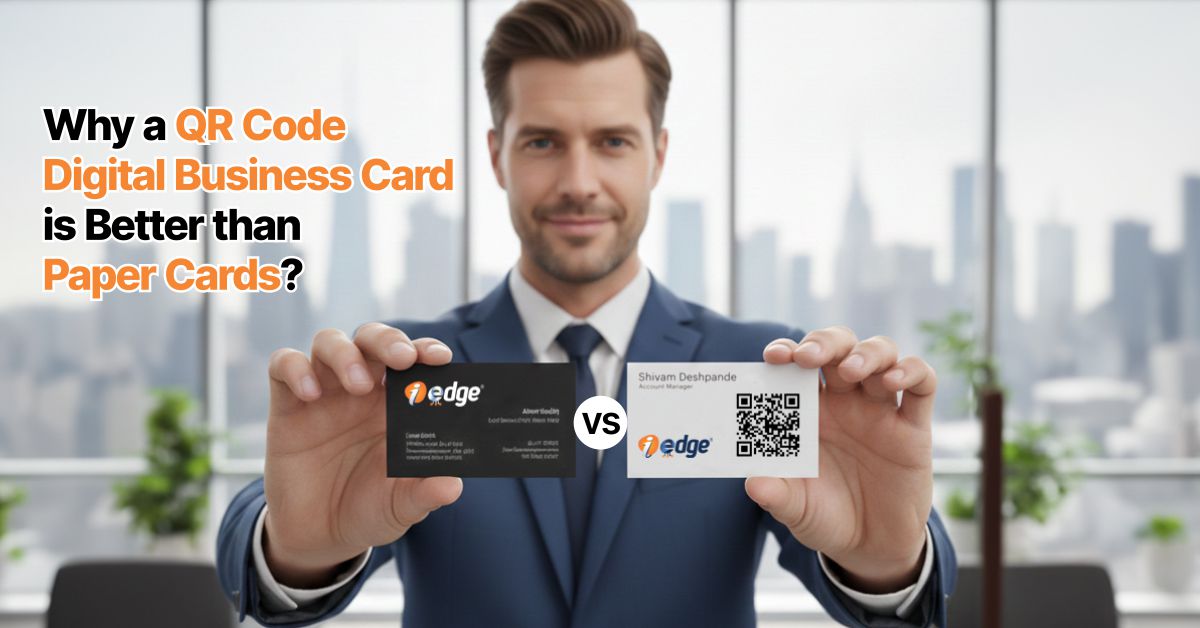
A QR code digital business card refers to an online version of your business identity. It carries your contact details, profile links, addresses, portfolio, social accounts, and other brand information. Users scan the QR code with a smartphone and get instant access to your digital profile.
Top Features of QR Code Digital Business Card
- QR code offers quick scanning and sharing
- A mobile-friendly landing page
- Option to update details anytime
- Support for images, videos, and documents
- Multiple sharing options
- Analytics to track views and scans
- Contact saving with one click
Top Benefits
- You never run out of cards
- You can update your details anytime without reprinting
- It shares your identity anywhere, even online
- It boosts networking speed during events, meetings, and conferences
- Improves brand presence with digital media elements
- Creates a modern identity that matches global business expectations
| Pros | Cons |
| Cost-effective over time | Needs a smartphone to scan |
| Better for the environment | Needs internet in some cases |
| Easy to share and update | Some traditional users may take time to adapt |
| Works well for remote and hybrid teams | |
| Unlimited sharing without physical limitations |
Learn how digital cards help in contact enrichment.
What is a Paper Business Card?
A paper business card is a printed card that carries your basic contact details. It is widely used in traditional business environments and has been a common networking tool for decades.
Top Features of Paper Business Card
- It has a printed layout
- Fixed design and content
- Needs reprinting for changes
- Used mainly in offline interactions
Top Benefits
- Good for first impressions in some industries
- Easy to pass physically
- Works without any device
- Simple and familiar for traditional users
| Pros | Cons |
| Tangible presence | Gets lost or damaged easily |
| Easy to carry in small quantities | Needs to be reprinted frequently with updates |
| Accepted in all traditional settings | Higher long-term cost |
| Limited space for details |
Find out how to create your professional online presence with iEdge.
Key Difference Between QR Code vs Paper Business Card
Below is a clear comparison based on common business criteria. The structure is adapted from the different chart used on the reference page.
| Criteria | QR Code Digital Business Card | Paper Business Card |
| Updatability | Update anytime online | Needs reprinting for changes |
| Cost | One-time or subscription-based | High recurring cost |
| Sharing Method | Scan, Link, Online | Hand-to-hand only |
| Information Capacity | Unlimited | Very limited |
| Durability | Last forever | Get lost or damaged |
| Analytics | Yes | No |
| Eco-Friendly | Yes | No |
| Customization | High | Limited |
| Access | Works anywhere | Only physical meetings |
| Convenience | Very high | Moderate |
This chart shows the major gap. The QR code version offers mobility, flexibility, and longevity. The paper version is restricted to physical interactions and carries high operational costs.
Study why a digital visiting card is perfect for global networking.
Why Are Digital Business Cards Better Than Paper Business Cards?
Different categories of businesses have different needs. Below are the major reasons based on industry type and operational goals.
1. Startups and Tech-Savvy Businesses
Startups and tech-driven companies move fast. They need tools that fit rapid growth. A digital card with a QR code supports this place. Teams can update job titles, phone numbers, and links instantly.
No need for repeat printing. This saves money in the long term. It also supports fast networking in events, demo days, investor meetings, and cross-country discussions. Startups also work with global clients through online calls.
A digital card makes it simple to share profiles on video calls, emails, and chat. This improves brand credibility and modern appeal. Paper cards do not support online sharing. This makes the QR-based version a stronger choice for young and high-growth ventures.
2. Traditional Industries
Traditional companies in manufacturing, real estate, finance, and retail still use paper cards. But many of them face problems with long printing cycles and rising costs. When employees change departments, designations, or locations, companies need to print new cards. This creates waste and expenses.
A QR code digital business card solves this problem. Companies can switch to a hybrid format. Employees can continue to use paper cards if they want. But the QR card becomes the primary identity for meetings, customer visits, and after-sales calls. This reduces printing by a large margin.
It also helps with conferences where companies meet thousands of visitors. People often lose paper cards. But a digital card stays on their phone, making follow-ups easier.
Know how a digital business card for startups is an affordable networking solution.
3. Individuals on a Tight Budget
Freelancers, consultants, students, and solo professionals often avoid printing due to the high cost. A digital card is perfect for them. It is budget-friendly and carries all important information. They can add portfolios, work samples, resumes, and social links.
This is not possible on paper. A virtual business card with a QR code is also great for those who need frequent updates. If someone changes work fields or services, they can update the card instantly. This level of flexibility gives small professionals an advantage in competitive markets.
4. Businesses Focused on Sustainability
Global companies now avoid unnecessary paper usage. Many leaders across India and USA add sustainability goals to their yearly plans. Physical cards create paper waste. Most recipients throw them away. This impacts the environment and increases cost.
A QR-based card removes the need for printing. It reduces waste and contributes to green goals. Many Fortune 500 companies are shifting to digital identity tools for this reason.
5. Smartphone Penetration is Rising
Smartphones are now used by almost every professional. India and USA have some of the highest mobile adoption rates. This makes QR-based networking simple and universal. Anyone can scan the code within seconds.
This helps during travel, meetings, and exhibitions. Paper cards do not support mobile convenience. So, professionals often forget them at home or misplace them. With a digital card, you carry your identity in your phone at all times. This improves networking reach and contact retention.
Find out how to boost personal branding with a personal business card.
6. Hybrid Approach for Modern Teams
Many companies follow hybrid work models. Employees work from home and the office. They also meet clients online and offline. A paper card only works in physical situations. A paper card only works in physical situations. A digital card works in both.
Employees can share their digital identity in online meetings through screen sharing or chatting. They can also display the QR code on their laptop cover during events. This hybrid flexibility increases networking opportunities.
Conclusion
The shift from a paper business card to a QR code digital business card is now a major business movement. Companies want better connections, lower cost, and easy contact sharing. Paper cards worked for years, but they no longer fit the speed of modern business.
Digital cards support updates, analytics, mobile sharing, and sustainability. They help leaders create a smart identity that works across online and offline environments. For teams, this switch is not just a trend.
It is a strategic move for better networking and a better brand presence. With rising smartphone usage and the demand for digital identity, the future belongs to QR-based cards.
FAQs
To create a digital business card with a QR code, go to the iEdge homepage and click the “Create Card” button, and follow the instructions on the screen, or follow the instructions mentioned on this blog – Guide to make a professional business card with iEdge.
Yes, you can use a QR code for your digital business card as it can contain your website links, catalogs, videos, images, social profiles, and many more. It is a widely used and effective method for modern professional networking.
Digital business cards are highly effective, offering significant advantages in convenience, cost-efficiency, and functionality over paper cards. These modern networking tools are rapidly gaining traction, especially among tech-savvy professionals and sustainable businesses.
You can create or order your QR code from the iEdge website. Visit the website and create a lead from the contact section.
Yes, you can get an NFC-enabled QR code digital business card with iEdge. We can build your hybrid card with NFC and a QR code. Simply connect with us through the contact page, and our team will fulfil your queries quickly.