
How Digital Business Cards Help in HRMS
Digital business cards for HR are changing how people manage identity, communication, and employee records. According to research from MarketsandMarkets, the global digital transformation market continues to grow at a strong pace, with HR technology among the active investment areas.
That matters because modern HR systems now depend on connected tools, fast access to employee information, and professional communication. If you manage hiring, employee records, or internal communication, you already know old methods create friction.
Paper cards get lost. Contact records become outdated. Manual sharing slows response time. This is where digital business cards for HR bring value. A modern human resource management system works best when employee data, communication, and branding work together.
A professional digital identity supports that goal. When integrated with HRMS, digital cards can help you improve onboarding, support internal collaboration, and strengthen employer branding.
For HR consultants and professionals, a business card is no longer just a networking asset. It can support process efficiency, employee access, and stronger engagement.
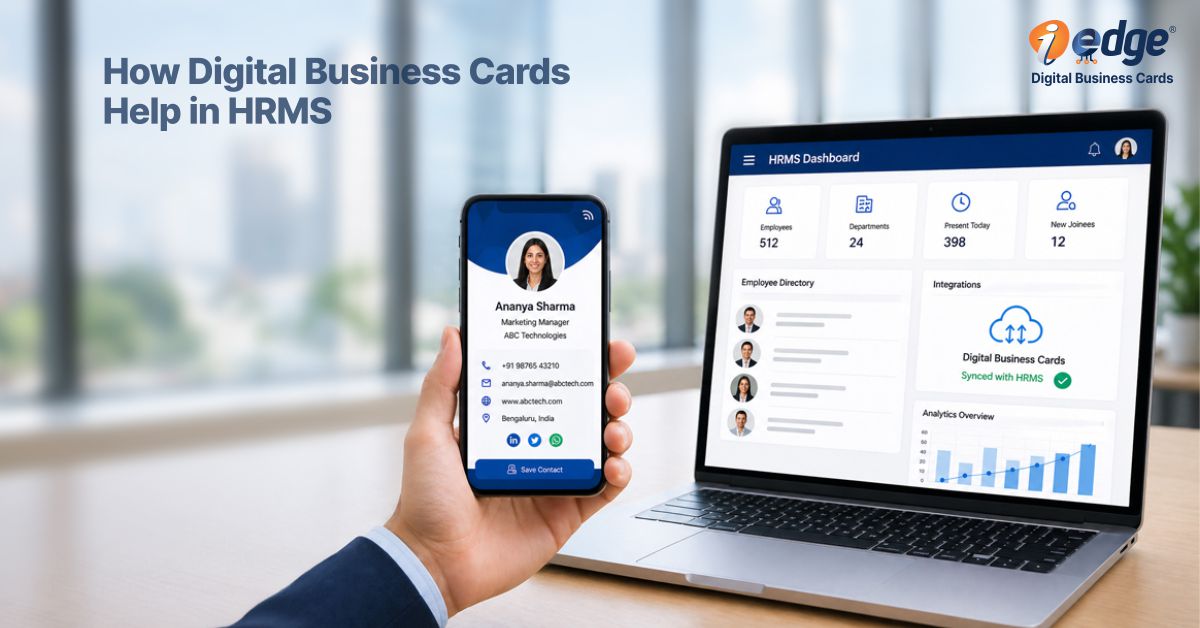
What is Digital Business Cards for HR?
Digital business cards for HR are virtual contact cards built for HR professionals, recruiters, and teams. They store professional details such as:
- Name and designation
- Department and role
- Email and phone
- Social and professional links
- Meeting scheduler
- Company profile
- HR policy documents
- Employee resource links
Unlike printed cards, these cards can be updated in real time. This makes them highly useful in HR systems where data changes often. A free digital business card can even help small HR teams start using digital identity tools without major investment.
How It Works
The process is simple.
- Create your profile using a digital card platform.
- Add contact details, HR resources, and links.
- Share through QR code, NFC, email signature, or messaging.
- Connect the card with HRMS workflows or employee directories.
- Update details once and distribute updated information instantly.
This is why digital business cards for HR fit well inside a modern human resource management system.
Why HR Professionals Use Them
HR teams manage people, records, and communication daily. A business card for HRs can support credibility while reducing delays in information sharing.
Common use cases include:
- Candidate communication
- Employee onboarding
- Vendor coordination
- Internal directory access
- Training resource sharing
- Policy distribution
Many teams start with a free digital business card before expanding across departments
How Do Digital Business Cards Help in HRMS?
1. Faster Employee Onboarding
Onboarding often involves multiple introductions, documents, and systems. Digital business cards for HR help new hires access the right contact details immediately. An employee can receive a card containing:
- HR representative details
- Benefits contacts
- Policy documents
- Leave portal access
- Training resources
This supports stronger HR systems performance and reduces confusion in early employee interactions. When connected to HRMS, the card acts as a simple access layer to relevant resources.


2. Better Data Accuracy Across HR Systems
Outdated employee information creates problems. Phone numbers change. Roles change. Reporting managers' change. With digital business cards for HR, updates happen once and can reflect across connected HR systems.
This matters in every human resource management system where data quality affects operations. It also improves trust because employees have access to current information rather than outdated records.
3. Improved Internal Communication
Communication gaps often slow HR operations. A digital card can connect employees to:
- HR help desks
- Payroll contacts
- Compliance officers
- Recruiters
- Learning teams
This supports faster collaboration inside HRMS environments. For distributed teams, digital business cards for HR help ensure more consistent communication across locations.


4. Stronger Recruitment and Candidate Experience
Candidate experience matters. When a recruiter shares a professional card, candidates receive verified contact information, scheduling links, and company resources in one place. That makes a business card for HRs valuable in recruitment.
It also strengthens HR systems used for applicant communication. Some recruiters begin with a free digital business card and later expand usage into broader hiring workflows.
5. Support for Employer Branding
Every interaction shapes an employer's perception. Branded digital business cards for HR present a modern image. They can include company messaging, culture content, and career links. That helps support branding goals connected to human resource management system strategies.
In many organizations, branding and HRMS objectives are becoming more connected.


6. Useful Analytics for HR Decisions
Many digital card platforms provide analytics such as:
- Card views
- Links clicks
- Resource downloads
- Meeting requests
These insights can support HR systems decisions.
For example, if employees often click benefits links, HR may improve benefits communication. This makes digital business cards for HR more than a contact tool.
7. Supports Hybrid and Remote Work
Hybrid work has changed communication needs. A digital card works across devices and locations. That makes it practical for distributed teams using HRMS platforms. A connected human resource management system often benefits from tools that reduce dependence on office-based process. Even a free digital business card can support remote accessibility.

8. Easier Integration with Existing HRMS Platforms
Many organizations already use platforms for payroll, recruitment, and workforce management. Digital business cards for HR can complement those systems rather than replace them. They can support:
- Employee directories
- Applicant communication
- Internal portals
- Department contacts
- Knowledge resources
This improves value from existing HR systems investments. It also strengthens the role of the human resource management system as a connected ecosystem.
Key Benefits for HR Consultants and HR Teams
1. Professional Identity at Scale
If you manage multiple clients or large employee groups, digital cards support consistency. Using digital business cards for HR gives every stakeholder access to standardized professional information. That improves trust and supports HR systems efficiency.
2. Cost Efficiency
Printing cards repeatedly creates recurring costs. A free digital business card offers a low-risk starting point. Even paid solutions often reduce costs compared with traditional alternatives. This can be valuable when expanding HRMS initiatives
3. Better Employee Experience
Employee experience often depends on accessibility. When workers can quickly reach the right HR contact, use shared resources, and access support links, the human resource management system becomes more useful.
This is one reason digital business cards for HR are gaining attention.
What Features Should You Look for?
When evaluating a solution, prioritize features such as:
- QR and NFC sharing
- Directory integration
- Security controls
- Role-based updates
- Analytics reporting
- Branding customization
- Support for HRMS connections
A strong solution should improve existing HR systems rather than add complexity. If you are starting small, a free digital business card can help test adoption.
Conclusion
If you want more value from your HRMS, digital identity tools deserve attention. Digital business cards for HR can support onboarding, communication, branding, and data quality while improving how your HR systems perform.
They also strengthen the value of a connected human resource management system by making information easier to access and easier to manage.
Whether you start with a free digital business card or adopt a broader enterprise approach, the opportunity is practical. You improve professional visibility, support employees, and create stronger operational consistency.
For an HR consultant or internal team, modern business cards for HRs are no longer a simple contact asset. It is a useful extension of the digital HR strategy.
As organizations continue investing in HRMS and connected HR systems, adopting digital business cards for HR can help you build confidence, improve efficiency, and support long-term growth.
FAQs
Yes, digital business cards for HR can integrate with many HRMS platforms through APIs, employee directories, CRM tools, and communication systems. This helps connect contact sharing, onboarding resources, and employee records within existing HR systems.
A connected Human resource management system benefits when HR teams can share updated information without manual effort. Even a free digital business card can support basic integrations.
For HR professionals, this makes a business card for HRs more than a networking tool. It becomes part of daily HR operations.
Digital business cards for HR support faster communication by giving employees instant access to verified HR contacts, policy links, support resources, and scheduling tools. This improves collaboration inside HR systems and reduces delays caused by outdated contact information.
In an HRMS, digital cards help centralize communication access while improving employee responsiveness. A Human resource management system works better when information is easy to find.
A business card for HRs also improves communication with candidates, vendors, and internal teams.
Yes, many digital business cards for HR offer secure sharing through permission controls, encrypted links, and restricted access settings. This makes them suitable for professional use within HR systems.
A modern HRMS benefits when shared information stays current and protected. Many platforms also support admin controls for enterprise use within a Human resource management system. Even a free digital business card may include privacy settings.
For HR professionals, a secure business card for HRs supports trust while protecting sensitive business information.
Look for features such as QR sharing, NFC support, profile updates, analytics, employee directory integration, and compatibility with HRMS platforms. Good digital business cards for HR should support communication across HR systems while improving accessibility.
Security controls and branding options also matter. A strong solution should support your Human resource management system goals, not add complexity. Some providers offer these features even in a free digital business card.
For long-term value, choose a business card for HRs that supports growth and usability.
A Human resource management system benefits digital identity tools because they improve contact access, communication, onboarding, and data accuracy. Digital business cards for HR support these areas while helping HR systems become more connected.
In HRMS environments, digital identity tools can reduce manual work and improve employee experience. They also support recruitment and internal coordination. A free digital business card can be a starting point for adoption.
For professionals, a business card for HRs becomes a practical tool that supports stronger HR operations.