
Digital Business Cards for SMEs: A Complete Guide
Digital business cards for SMEs are becoming a practical solution for small and medium-sized enterprises that struggle with outdated networking tools. Traditional paper cards often get lost, become outdated, or fail to capture customer interest.
For growing businesses that rely on strong relationships and referrals, this creates a serious communication gap. A modern networking approach is required. SME owners and sales teams need a faster way to share contact details, present their brand, and engage prospects.
This is where digital business cards for SMEs come in handy. They combine technology, branding, and instant sharing to improve professional networking.
Understanding Digital Business Cards for SMEs
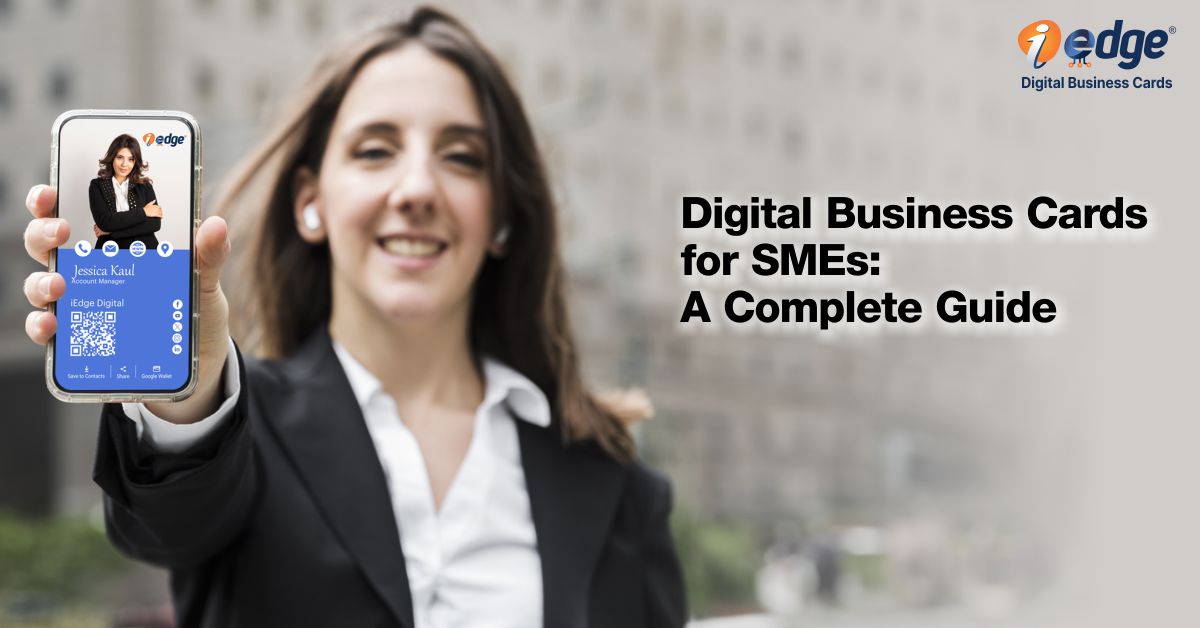
Before exploring their benefits, features, and more. It is important to understand the concept. Digital business cards for SMEs are virtual contact cards that store professional information in a digital format. They can be shared through QR codes, links, NFC technology, or messaging platforms.
Unlike printed cards, these cards can include multimedia content, analytics, and interactive elements. For growing companies, SME digital business cards deliver a modern networking solution that enhances brand presentation and simplifies contact sharing.
How Digital Business Cards for SMEs Work
The working model of digital business cards for SMEs is simple and effective. Instead of printing thousands of paper cards, businesses create a digital profile that represents their brand and professional details.
When a user shares the card, the recipient can instantly view the information on their phone or computer.

1. Creation of the SME Business Card
The first step involves creating an SME business card using a digital platform. The card typically includes:
- Name and designation
- Company name
- Phone number
- Email address
- Website link
- Social media profiles
- Company logo and branding
Many SME digital business cards also allow the addition of product catalogs, service descriptions, and appointment booking links.
2. Sharing the Smart Contact Card
Once the card is created, it can be shared instantly through multiple methods. Common sharing options include:
- QR code scanning
- NFC tap cards
- Email signatures
- WhatsApp or messaging apps
- Website buttons
A smart contact card allows recipients to save contact information with a single tap.


3. Contact Saving and Engagement
When the recipient opens the card, they can save the contact details directly to their phone. This feature makes quick business cards extremely useful for networking events, exhibitions, and client meetings.
4. Data Updates
One of the biggest advantages of digital business cards for SMEs is real-time updates. If a company changes its phone number or address, the information can be updated instantly. Every person who received the SME business card automatically sees the latest details.


5. Analytics and Insights
Many SME digital business card platforms offer analytics features. Business can track:
- Number of views
- Contact saves
- Link clicks
- Customer engagement
This turns a smart contact card into a valuable networking intelligence tool.
Features of Digital Business Cards for SMEs
A strong digital networking tool must offer several powerful capabilities. Below are the most important features that digital business cards for SMEs should include.

1. Instant Contact Sharing
The most important feature of SME digital business cards is instant sharing. With QR codes and NFC technology, users can share their details within seconds. These features transform traditional networking into a faster process using quick business cards.
2. Interactive Contact Information
A well-designed SME business card allows recipients to interact with the information.
For example:
- Tap to call
- Tap to email
- Tap to open the location on maps.
- Tap to visit the website.
This improves communication and reduces friction.


3. Branding and Customization
Strong branding plays a critical role for SMEs. Digital business cards for SMEs allow companies to present their identity professionally.
Businesses can customize:
- Logo
- Brand colors
- Company description
- About me
- Product images
A visually appealing smart contact card leaves a lasting impression on clients.
4. Multimedia Integration
Unlike traditional cards, SME digital business cards can include rich media.
Examples include:
- Product videos
- Service portfolios
- Brochures
- Image galleries
This transforms a simple SME business card into a mini digital presentation.


5. CRM Integration
Many platforms allow digital business cards for SMEs to connect with CRM systems. This helps businesses collect and manage leads more efficiently. When someone interacts with the smart contact card, their details can be added directly to the CRM database.
6. Contactless Networking
In modern business environments, contactless interaction is critical. SME digital business cards support this with QR code and NFC sharing. This capability makes quick business cards suitable for exhibitions, conferences, and corporate meetings.

7. Real Time Updates
Businesses change frequently. Phone numbers, services, and addresses often evolve. With digital business cards for SME, companies can update their information without reprinting thousands of cards. This feature keeps the SME business card accurate at all times.
Benefits of Digital Business Cards for SMEs
Adopting digital business cards for SMEs offers several strategic advantages for growing businesses.

1. Cost Savings
Printing traditional cards requires recurring expenses. Design changes, employee turnover, and rebranding increase costs. With SME digital business cards, businesses pay for a platform and update their details whenever required. This reduces long-term expenses significantly.
2. Faster Networking
Speed matters during business interactions. A smart contact card lets professionals share their information quickly using QR codes or links. Compared with paper cards, quick business cards improve networking efficiency.


3. Improved Brand Image
A professional presentation builds credibility. A well-designed SME business card with images, videos, and product information reflects a modern brand identity. This helps SMEs compete with larger companies.
4. Lead Generation
Digital cards can collect user data and track interactions. Many digital business cards for SMEs platforms include a lead capture form and analytics. These insights enable businesses to understand customer interests and refine their follow-up strategies.


5. Environment-Friendly Networking
Paper card printing contributes to waste. By adopting SME digital business cards, companies reduce paper consumption and support sustainable business practices.
6. Better Customer Engagement
Traditional cards only provide contact information. A smart contact card can include social media links, portfolios, and product pages. This increases engagement and gives potential clients more information about the business.

Pros and Cons of Digital Business Cards for SMEs
Like any technology solution, digital business cards for SMEs have both advantages and limitations.
Pros
1. Easy Updates
With SME digital business cards, businesses can update their details instantly. This removes the need to print new SME business card batches.
2. Higher Engagement
A smart contact card includes multimedia content and interactive links. This creates more engagement compared with traditional cards.
3. Efficient Networking
Using QR codes and NFC sharing, quick business cards make networking faster and more convenient. This is particularly useful for sales teams and entrepreneurs.
Cons
1. Technology Dependence
A digital solution requires smartphones and internet access. If a recipient is not comfortable with digital tools, the SME business card may not be used immediately.
2. Learning Curve
Some SME owners may take time to adapt to digital business cards for SME platforms. However, most platforms offer simple interfaces that lower complexity.
3. Platform Dependency
Businesses rely on the platform that hosts their SME digital business cards. If the service changes pricing or features, companies may need to adapt.
How Digital Business Cards Help SMEs
Small and medium enterprises face several challenges when building professional networks. Digital business cards for SMEs address many of these challenges directly.
1. Expanding Professional Reach
An SME business card in digital format can be shared globally through messaging apps and email. This allows businesses to connect with prospects beyond physical meetings.
2. Improving Sales Conversations
During meetings, a smart contact card can present product information, portfolios, and case studies. This helps sales teams communicate value more effectively.
3. Supporting Sales Teams
For organizations with multiple employees, SME digital business cards provide a unified brand identity. Every team member can use a consistent SME business card design with company branding.
4. Generating Qualified Leads
When customers interact with digital business cards for SMEs, businesses can track engagement. These insights help identify potential clients who show interest in services.
5. Enhancing Event Networking
Trade shows and conferences create opportunities for new connections. Using quick business cards, SME professionals can share their information with hundreds of attendees within minutes.
6. Strengthening Digital Presence
A smart contact card connects customers to websites, social media pages, and product catalogs. This improves digital visibility and builds stronger brand awareness.
Choosing the Right Digital Business Card Platform for SMEs
Selecting the right platform is important when adopting digital business cards for SMEs. SME owners should evaluate several factors before making a decision.
Key Factors Include
- Ease of use: The platform should permit users to create an SME business card quickly without technical skills.
- Customization options: Businesses should be able to design a smart contact card that reflects their brand identity.
- Analytics capabilities: Tracking engagement helps companies measure the effectiveness of their SME digital business cards.
- Integration options: The platform should support CRM systems and marketing tools.
- Security and reliability: Professional networking requires secure platforms that protect user data.
Best Practices for Using Digital Business Cards
For the best digital business cards for SMEs, businesses should follow a few practical strategies.
- Keep information clear: A well-structured SME business card should present information in a simple, understandable format.
- Use strong branding: A visually appealing smart contact card improves brand recognition.
- Add social proof: Customer testimonials and product examples improve credibility.
- Share consistently: Professionals should include quick business cards in email signatures, social media profiles, and presentations.
- Track engagement: Analytics from SME digital business cards can reveal how prospects interact with the card. These insights help refine networking strategies.
Future of Digital Business Cards for SMEs
The adoption of digital business cards for SMEs is increasing as businesses move toward digital networking solutions. Several trends are shaping this space.
- AI-powered networking: Future SME digital business cards may include AI-driven recommendations and automated follow-ups.
- Deeper CRM integration: Businesses will be able to convert smart contact card interactions directly into sales opportunities.
- Advanced analytics: Analytics will provide deeper insights into customer behavior and networking effectiveness.
- Industry-specific templates: Platforms may introduce specialized SME business card templates for different industries.
These developments will make quick business cards even more powerful tools for small businesses.
Conclusion
Digital business cards for SMEs offer a practical and modern solution for professional networking. They help small businesses share their contact details swiftly, present their brand effectively, and capture valuable leads.
With features such as instant sharing, analytics, and multimedia integration, these cards go far beyond traditional networking tools. For SMEs looking to improve communication, client reach, and sales opportunities.
Adopting SME digital business cards can create a strong competitive advantage in today’s digital business environment.
FAQs
A. Digital business cards for SMEs offer a modern way to share contact details without printing costs. Unlike traditional cards, SME digital business cards can include links, portfolios, and social media profiles. A smart contact card allows clients to save contact details instantly.
Businesses can also update their SME business cards anytime without reprinting. These quick business cards help SMEs network faster, present a professional brand image, and improve client engagement during meetings, events, and online communication.
A. Yes, digital business cards for SMEs are suitable for most industries, such as retail, consulting, real estate, marketing, and technology services. Any business that depends on networking and client communication can benefit from SME digital business cards.
A digital SME business card allows professionals to present their services, share contact details, and connect with clients quickly. A smart contact card also helps teams distribute quick business cards through email, messaging apps, or QR codes.
A. Businesses can share digital business cards for SMEs through several simple methods. The most common options include QR codes, direct links, NFC tap cards, and messaging platforms. With SME digital business cards, a professional can send their SME business card through email signatures, WhatsApp, or social media.
A smart contact card opens instantly on a smartphone and allows the recipient to save contact details with one tap. This makes quick business cards ideal for meetings, online calls, and networking events.
A. Yes, most digital business cards for SMEs support QR codes and NFC technology. A QR code allows users to scan and access an SME business card instantly using their smartphone camera. NFC technology allows a smart contact card to open when two devices are tapped together.
These features make SME digital business cards easy to share in conferences, client meetings, and exhibitions. Because of this convenience, many professionals prefer quick business cards for modern networking.
A. Digital business cards for SMEs improve networking by making contact sharing fast and interactive. Instead of handing out paper cards, professionals can share an SME business card instantly through QR codes or links.
A smart contact card can include websites, portfolios, and social media profiles, which increases engagement. SME digital business cards also allow businesses to update information anytime. With quick business cards, SMEs can connect with more prospects during meetings, events, and online conversations.